
Looking after your dog’s skin and coat is all part of being a responsible pet parent. However, with so much information and product choice, it's easy to become overwhelmed. It can be hard to know which dog shampoo for dry skin is best, for example. So, let’s explore everything you need to know about dry skin in dogs!
What does dry skin in dogs look like?
So, how do you know if your dog has dry skin? Signs of dry skin in dogs include:
- Excessive dandruff (a small amount can be normal)
- Flaking skin
- Crusty areas of skin
- Itchy skin
- Red patches of skin
- Dull coat
- Thinning of the fur
It’s important to note that some of these signs can also indicate a medical issue.
What causes dry skin in dogs?
There are many possible causes of dry skin in dogs and finding the cause is important. Your dog’s dry skin is unlikely to improve unless you address the underlying issue.
Mild cases of dry skin can be caused by something as simple as the central heating going on at the start of winter. Possible causes of more pronounced, or longer lasting, dry skin include:
- Nutritional deficiencies
- Parasites (fleas, lice, mites)
- Skin allergies
- Skin infections (pyoderma or ringworm)
- Some hormonal conditions (such as an under-active thyroid, known as hypothyroidism)
- Autoimmune skin disease (this is rare).
It’s also possible for a build up of dandruff to be caused by poor grooming. For example, your dog may not be able to groom themselves properly due to arthritis or obesity.
4 tips for looking after dry skin in dogs
The best treatment for your dog’s dry skin will depend on the underlying cause.
Here are our 5 top tips for looking after dry skin in dogs:
1. Nutrition
A good quality, nutritionally complete dog food can make all the difference! If it's a food allergy, it might be wise to try a prescription hydrolysed diet, or a ‘novel protein’ diet. Diets naturally rich in omega-3 fatty acids, such as salmon-based diets, can be beneficial.
2. Skin supplements
Nutritional supplements specifically designed to support skin and coat health can help. These usually contain a combination of fish oil (omega-3 fatty acids), vitamins (A, E or biotin), minerals (zinc), probiotics and natural antioxidants (such as rosemary extract).
3. Dog shampoo for dry skin
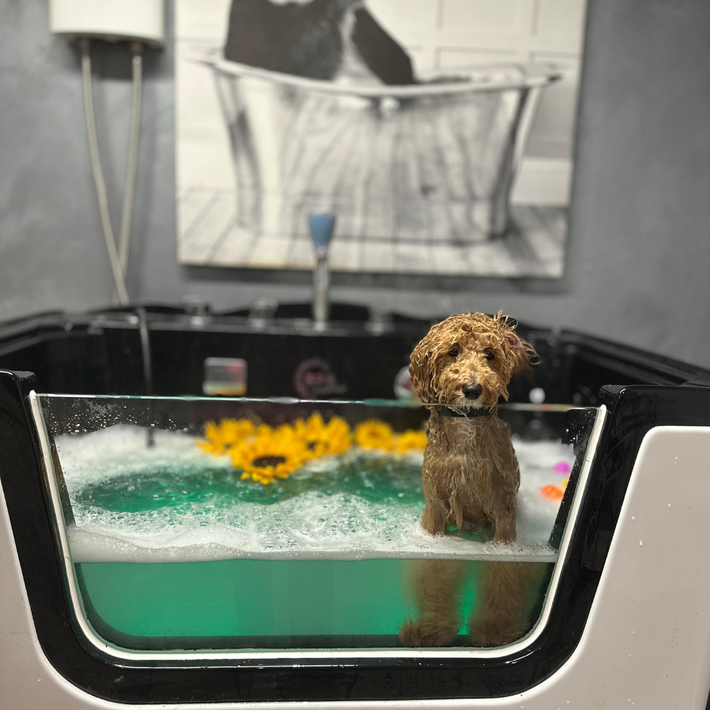
You can get special dog shampoos for dry skin, which are gentle and moisturising. These shampoos will contain ingredients such as oatmeal, coconut oil, shea butter and vitamin E. It’s best to avoid fragranced shampoos, any artificial colourings, and chemicals such as sulfates or parabens.
While a gentle, moisturising shampoo can help your dog with dry skin, it’s important not to bathe them too often. Bathing too frequently can strip the skin of its natural oils, making the dry skin worse.
4. Grooming
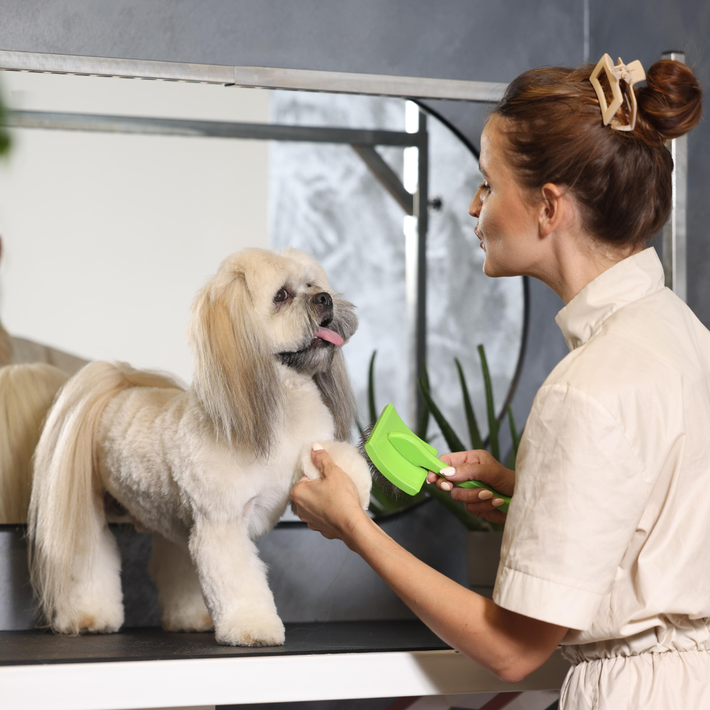
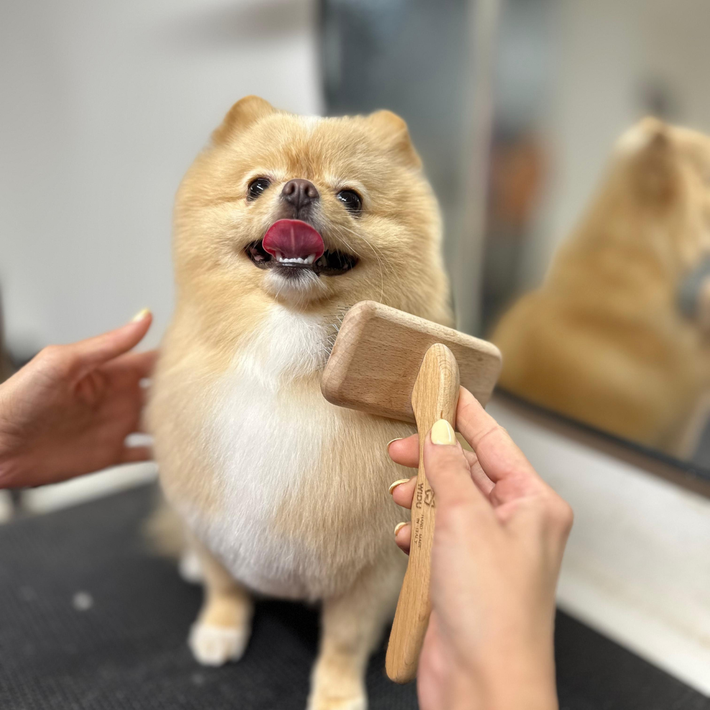
Grooming your dog regularly can remove dandruff and help to distribute the skin’s natural oils. To avoid irritation, use brushes specifically designed for sensitive skin and use gentle pressure.
Key Points
Helping your dog with dry skin needs a multi-pronged approach, including proper nutrition, appropriate grooming and preventative health care.